

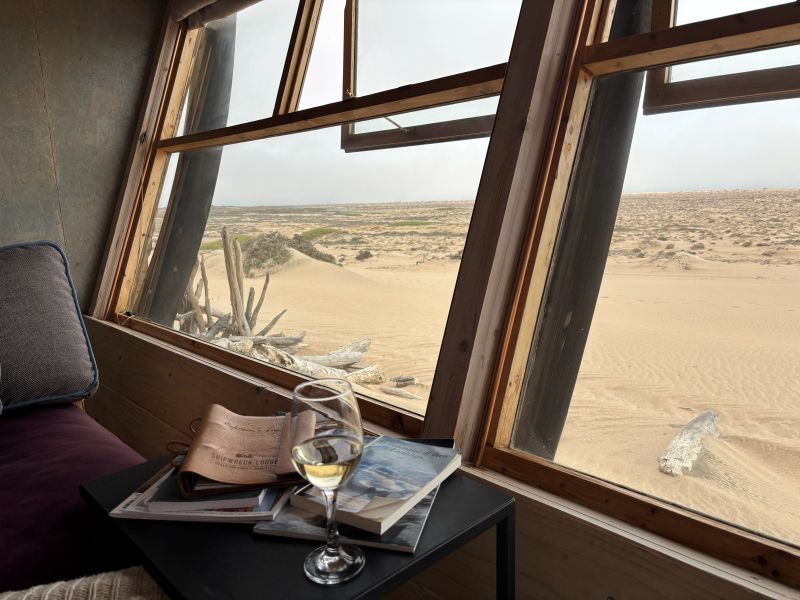
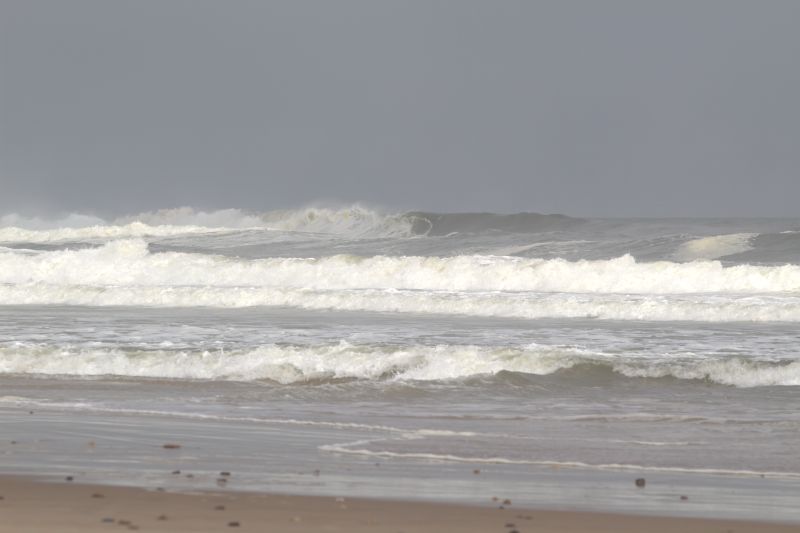
Untamed coastline with rambunctious waves.
Soothing fog and cool ocean air.
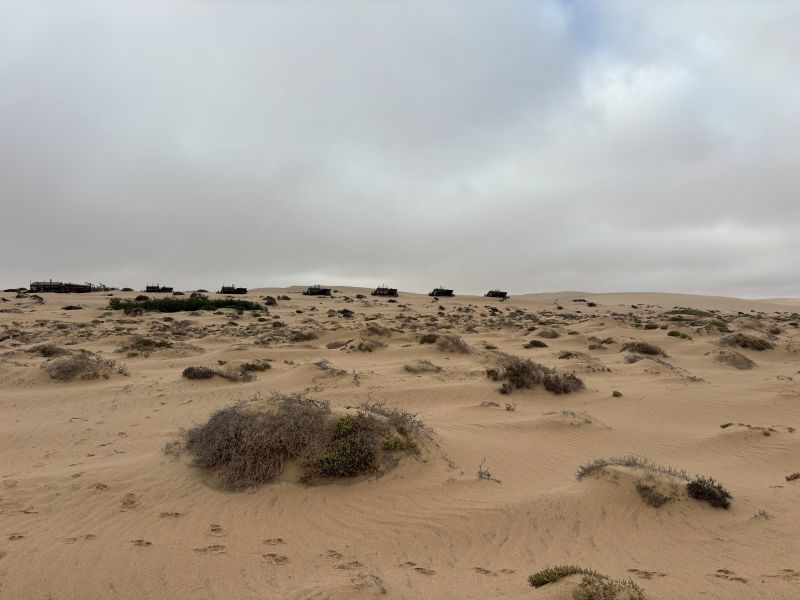
Pristine sand dunes filling the horizon.
Namibia Series
Travel Day: Desert Whisper to Skeleton Coast
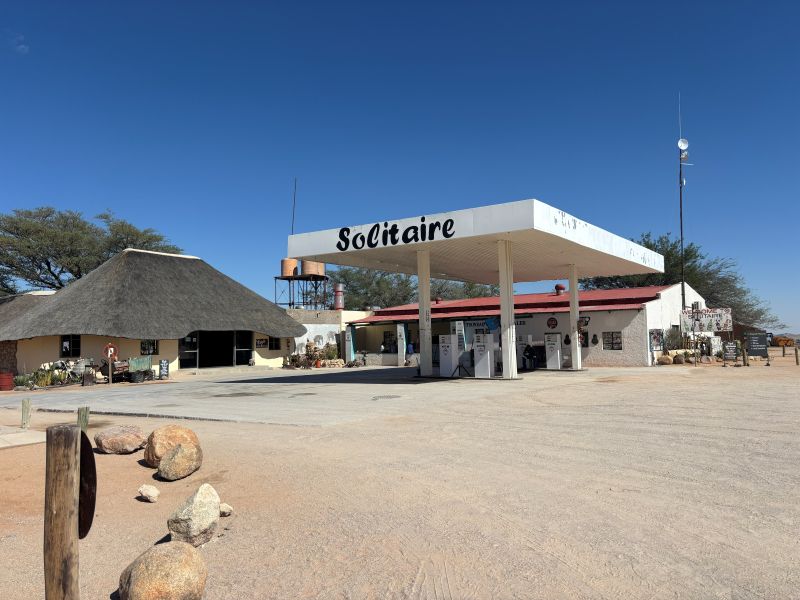
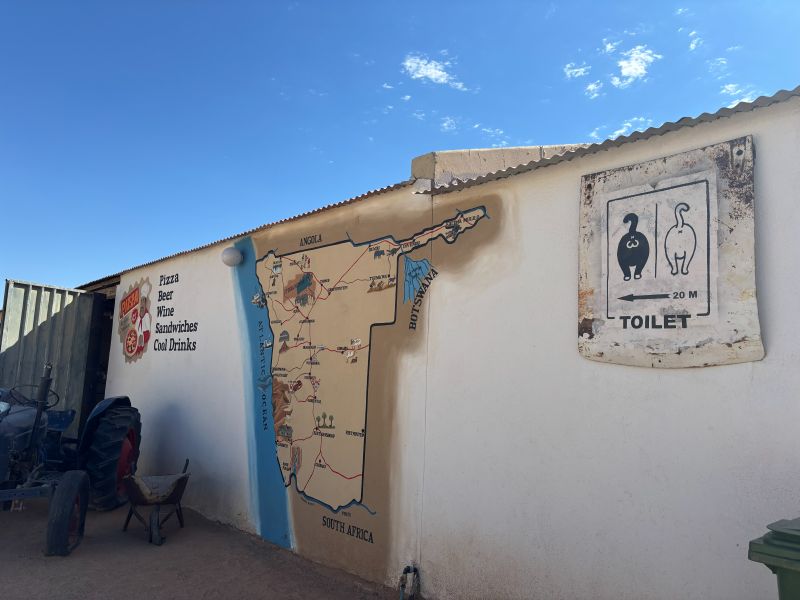
We were sad to leave Desert Whisper but looking forward to the Skeleton Coast. Levine took us to the air strip at Solitaire, 30 minutes away. There was time before the plane arrived, so we checked out the shop and bakery at this quirky settlement.
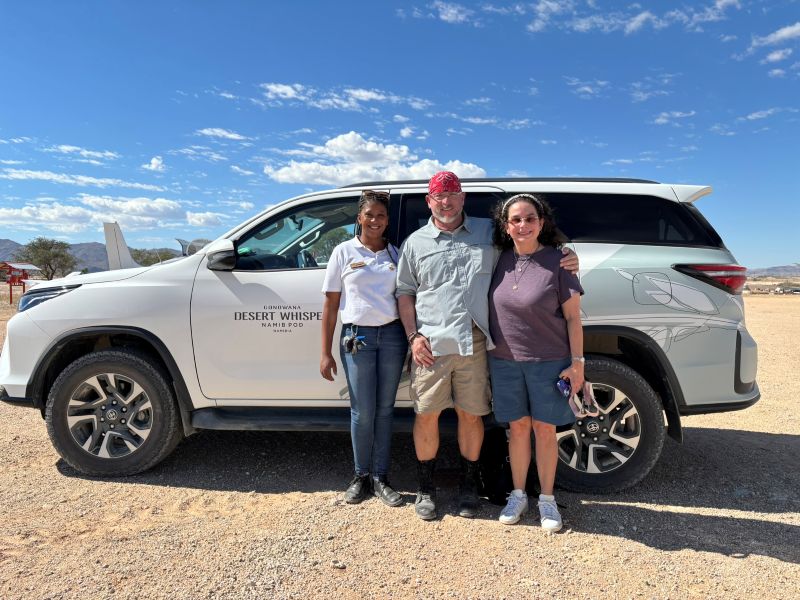
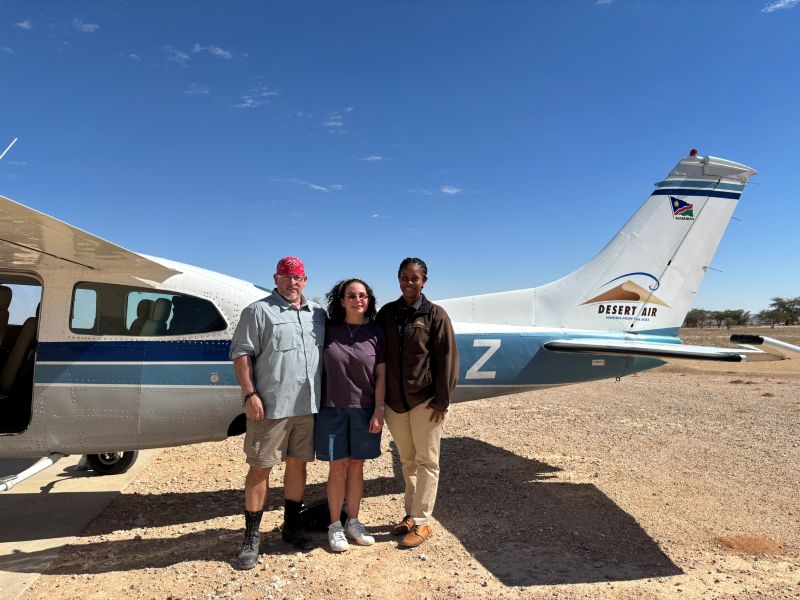
When the plane arrived, we drove onto the airstrip and met Desert Air pilot Rosanna (Rosie). After loading the luggage, we said goodbye to Levine and boarded the Cessna 210. Rosie did a safety briefing, reviewed our flight plan, and provided ear plugs – then we took off.
Flying in a small plane is cool because you can see the ground so clearly. I took a few pictures of the interesting terrain and thought of Paul van Schalkwyk’s beautiful photos.
Our flight path provided a fantastic view of Namibia’s largest mountain – Brandberg Mountain. Formed from a volcano, it is 2,573 meters high and visible from space. Check out the video…
We flew 90 minutes then landed in Mowe Bay to refuel and stretch our legs. Before taking off, Rosie received a dense fog report from the primary landing strip and said may need to land at an alternate air strip further from the lodge. After flying 45 minutes north, Rosie determined it was not safe to fly to the primary Skeleton Coast air strip so we landed at the alternate landing area by the ocean.
The Skeleton Coast stretches 500 km (310 miles) along the west coast of Namibia by the Atlantic Ocean and 40 km (25 miles) inland. There are only five small towns – built by German colonizers. The southern part of the Skeleton Coast Park has several tourist facilities. The northern part is virtually uninhabited and is the ideal location to find peaceful seclusion. That’s why we decided to go there.
Trivia Question
(The answer is at the end of the post.)
Rosie locked up the plane then joined us for a short drive to Shipwreck Lodge’s reception building at the park entrance. Due to the lodge’s remote location, there are accommodations for pilots and drivers. The staff presented welcome snacks and cold beer before we joined other travelers for the two-hour drive north to the lodge.
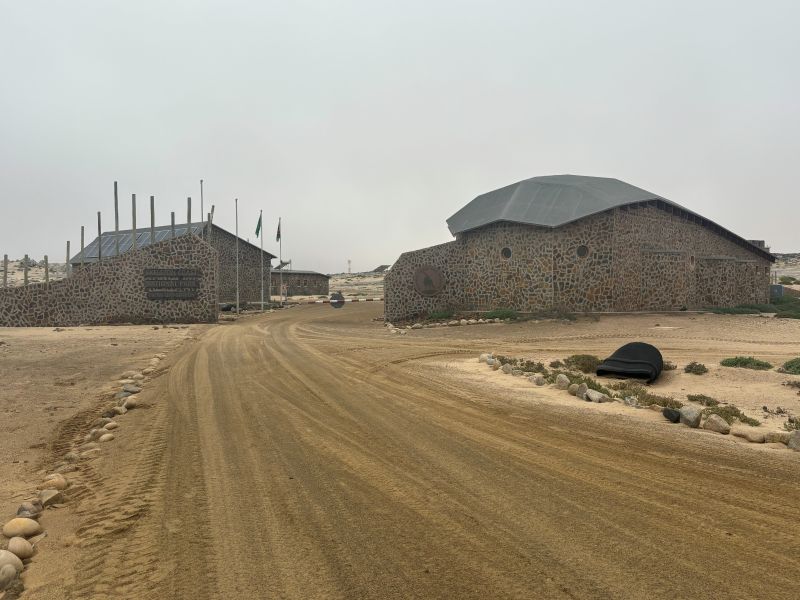
After traveling through pristine sand dunes, Shipwreck Lodge emerged through the fog. Emma was waiting with a big smile to greet us and do check in. A short walk on an elevated walkway led to our cozy nautical-themed room. Each room displays the story of a different shipwreck. Our room featured the Sir Charles Elliot – a local tugboat that assisted with rescues before succumbing to the Atlantic Ocean in December 1942.
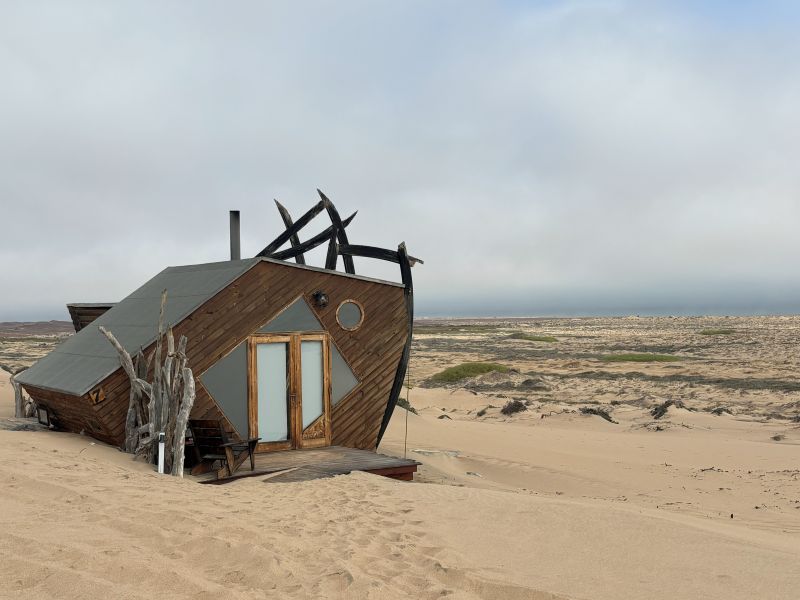
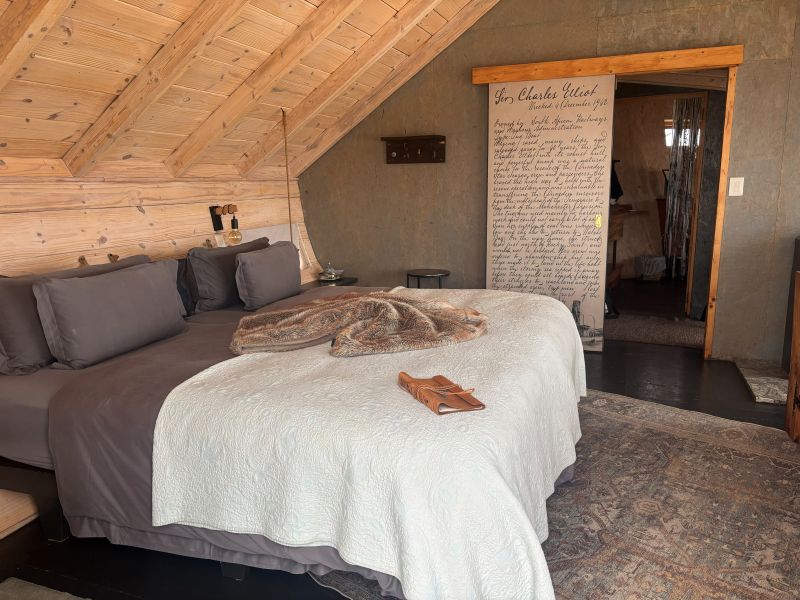
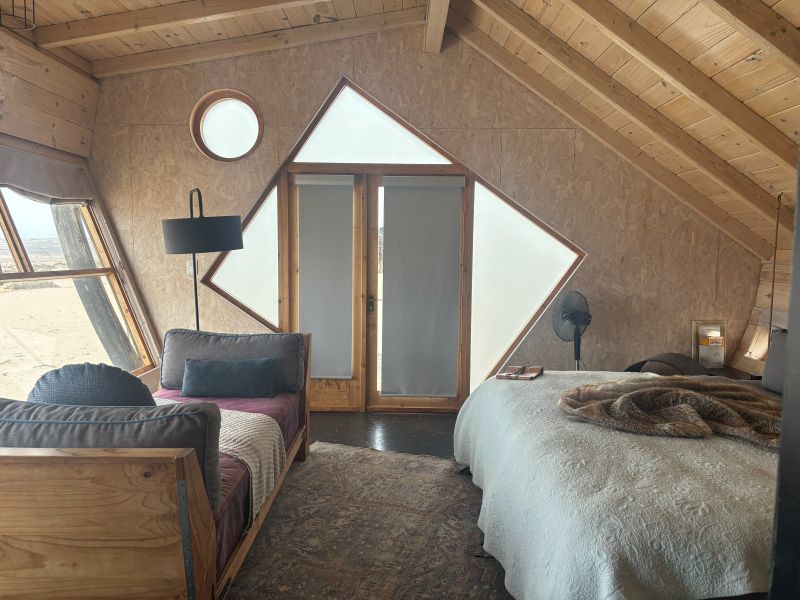
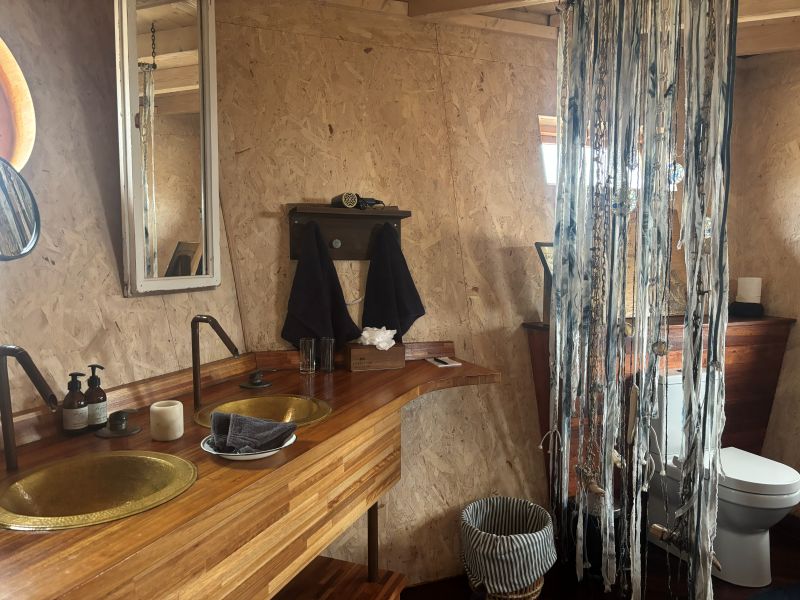
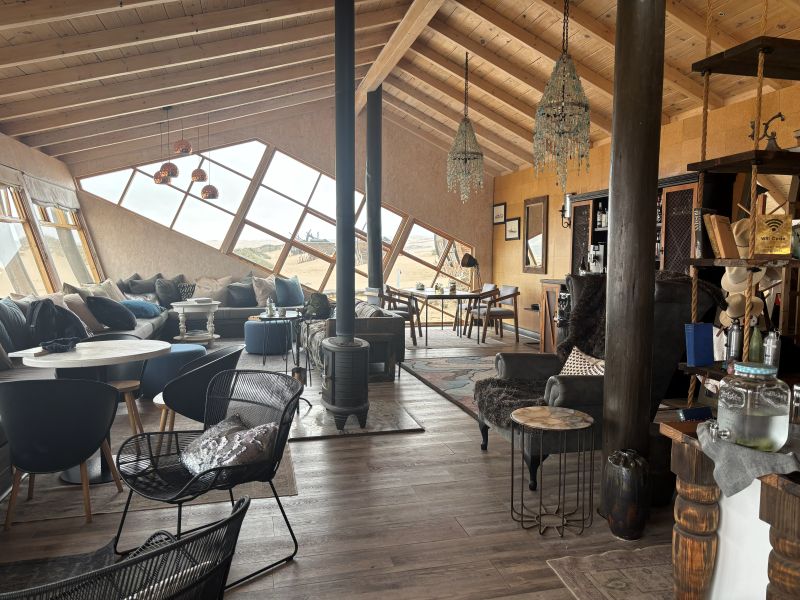
After settling in, we headed to the main lodge and had drinks on deck while the sun set (not visible due to the fog). I discovered a yummy cocktail – local gin with Fitch & Leeds pink tonic. During dinner, we met our guide for the next few days – Ballack. When we returned to the room, a fire in the fireplace and bush babies waiting. It was early to bed to rest for a busy day ahead.
Trivia Question
(The answer is at the end of the post.)
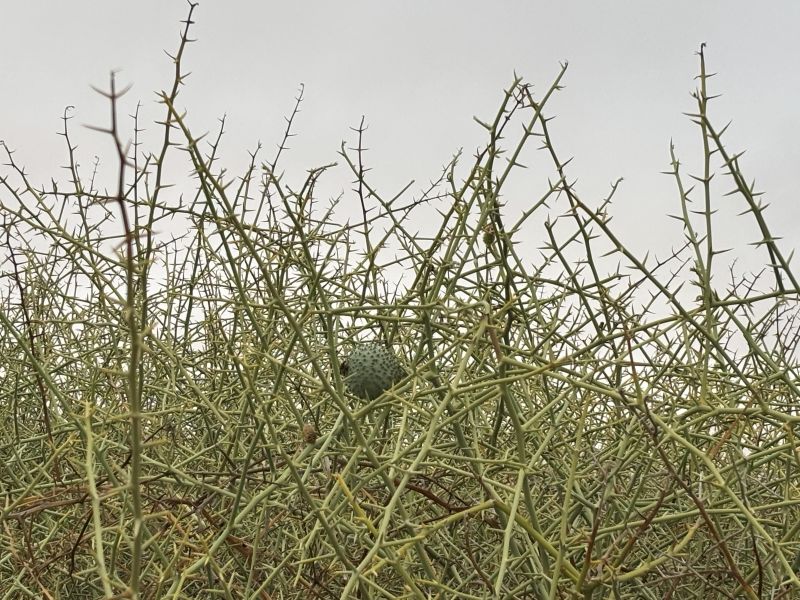
The next morning we joined Ballack and two couples for a two-mile walk to the beach. Ballack pointed out the various animal tracks: jackal, porcupine, hyena, cape wolf, snake, and crow. We didn’t see any animals because they are nocturnal and typically hide and sleep during the day. He pointed out the various flora like the nara melon plant which local distilleries like Stillhouse use to make gin. There were a few palm trees here and there – Ballack said they are not indigenous to the area and told us how they got there. Can you guess how? (This is the next trivia question.) During the walk, we enjoyed chatting with Johan and Manuella from Germany.
Trivia Question
(The answer is at the end of the post.)
When we reached the ocean, there was a barbeque lunch and bar set up on the beach. There was plenty of time to explore the beach and have a leisurely meal. After a five-minute drive back to lodge, we rested before the evening activities.
Evening Drive Along the Coast
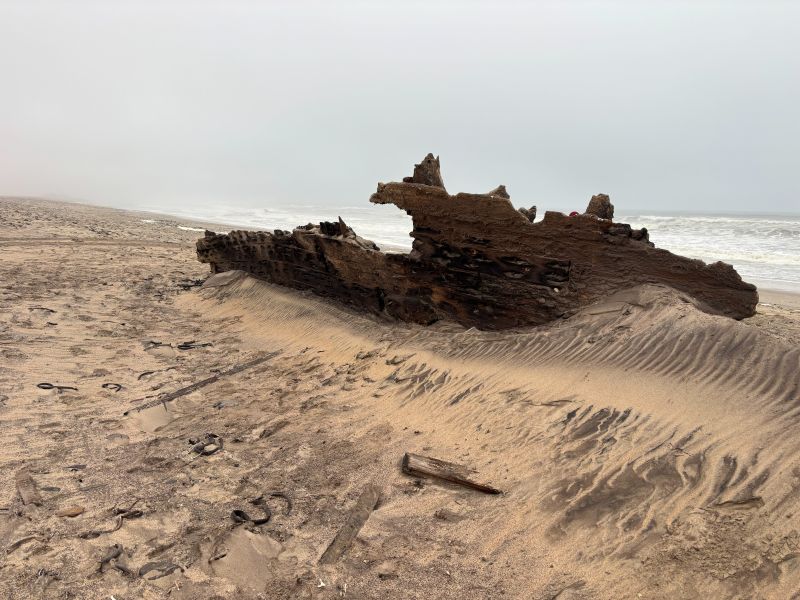
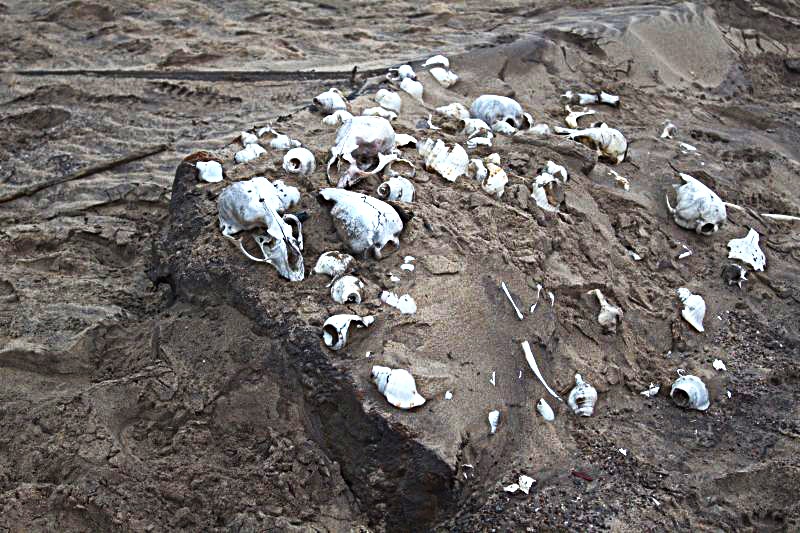
Our group gathered for a drive south along the coast to see some of the wrecks. A bulldozer from the diamond mining days in the 1940s – 1960s sat next to the runway we bypassed due to fog. Next, we saw the fishing vessel Karimona that burned after crashing in 1971. Ballack said many crash survivors did not make it, and their bones were found in the desert. The survivors set off to find help, but there are 40km of dunes with minimal water and shade between the coast and settlements.
Finally, we checked out pieces of a 1943 aircraft – Ventura Bomber – that were scattered about. Ballack told us the story: it got stuck in sand and the crew was able to free it. They took off but had engine failure 30 minutes later and crashed. All three crew on board survived.
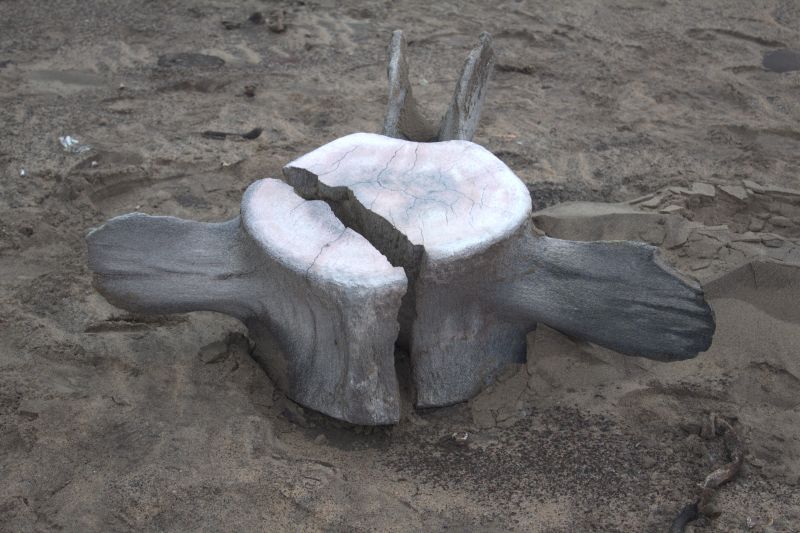
There were various whale and fish bones throughout the area and an occasional seal carcass. We saw a beautiful, white-breasted cormorant and a jackal on the way back to the lodge.
Sand Dunes & Hoarusib River
Our excursion partners checked out the next day, so we had Ballack to ourselves for a trip to see the sand dunes and Hoarusib River.
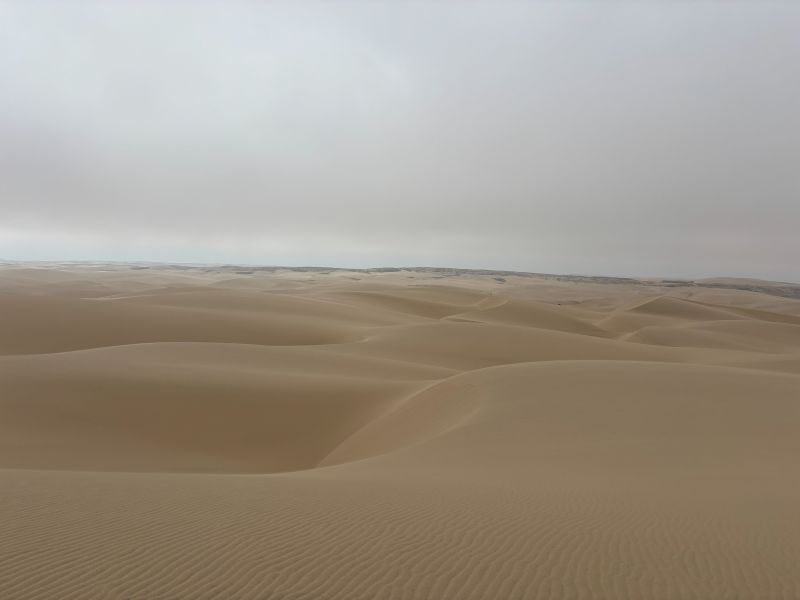
We drove off road to the incredible sand dunes and then got out to take it in. I turned in a circle – all I could see was pristine dunes in various shapes formed by the wind. All I could hear was the sound of the wind around us.
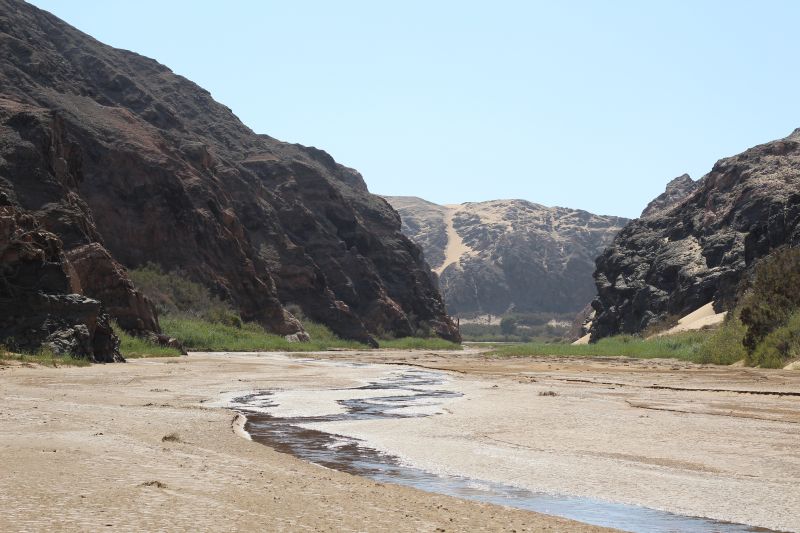
Next, we continued driving inland until we reached a dry riverbed surrounded by granite mountains. The Hoarusib River stretches 300 km inland and has a 1-2 meter water level January – April.
We didn’t have any luck seeing local wildlife because the water level was low. Ballack said a lion and elephant visit when the water is higher – the last time they were around was 1- 2 months ago. In addition, a lioness and her cub live in the area – the hotel put a collar on her to warn staff and guests when they are in the area.
At dinner the staff sang happy birthday and other songs for a guest who was celebrating her birthday. The songs were beautiful and made me smile.
Goodbye Skeleton Coast
After three nights, it was time to say goodbye to the wonderful Shipwreck Lodge team. They even gave us a special gift – a signed book about a famous shipwreck: Skeleton Coast: The dramatic rescue operation of the Dunedin Star.
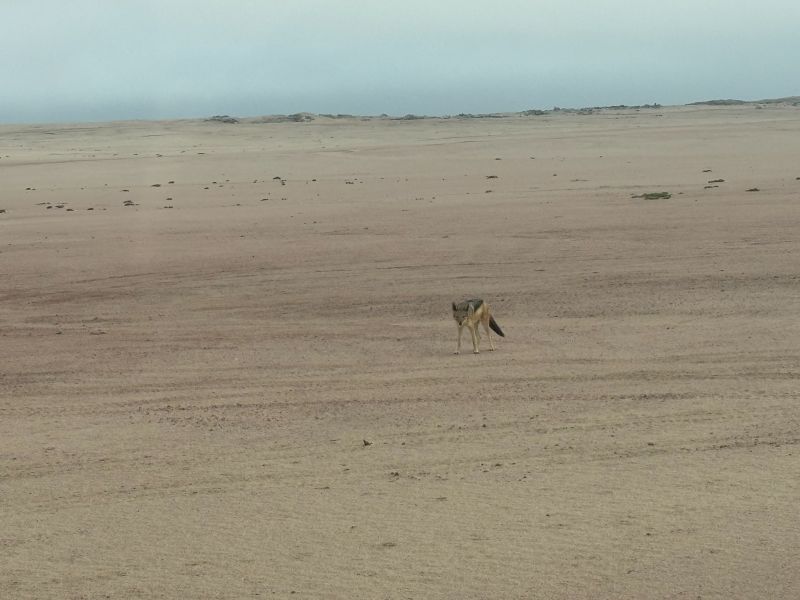
We settled in for the two-hour drive to the airstrip with Rosie and had a little adventure on the way. When feasible, we traveled in the sand right along the ocean. We interrupted a jackal trying to drag a seal carcass away for lunch. Close to the air strip we ran into a small group of jackals and watched them for a while.
I think one of the jackals followed us to the plane and stood nearby watching us load up and take off.
Join us at the next destination…
Trivia Question Answers
Answer: The area was named Skeleton Coast because many ships crashed there due to the strong winds, thick fog, and rocky shoals.
What is a bush baby?
Answer: A hot water bottle put in bed to stay warm.
How did palm trees start to grow in Namibia?
Answer: Elephants from Botswana (transferred seeds via poop).
There is beauty in descilation